8 to 10: water at the plug or outlet, a gas smell, or a ceiling bulging below the leak. Use the list above; those go to 911 or the utility.
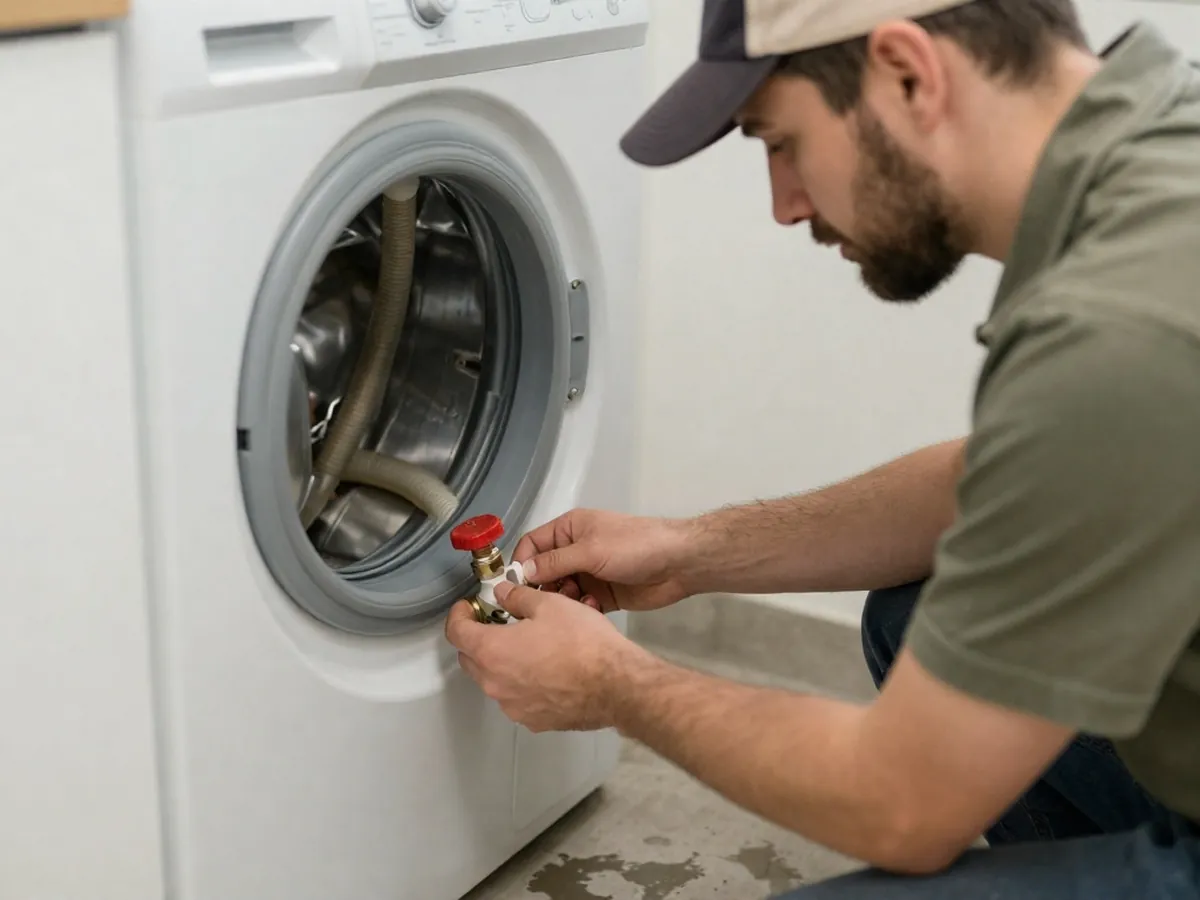
Washer and water heater leaks in Ball Ground
Appliance and Water Heater Leaks, Ball Ground
Appliance leaks in Ball Ground, GA tend to start out minor: damp flooring behind the washer, a dishwasher stain, or a wet patch around the base of the water heater. Call (678) 899-6694, name the appliance and describe how far across the floor the water ran.
What decides the size of an appliance leak
Mostly time and hiding places. A leak that runs while the house is empty can reach the floor, the cabinet bottoms and the wall behind them. UGA's checklist points to water heater and washing machine lines as places small leaks begin. The contractor looks at whether the water reached the subfloor, the next room or a ceiling below. The listing quotes no price. Photograph the appliance, the floor and the wall behind it before anything moves; the NAIC lists photos among the first claim steps.
What stays and what goes
The appliance, and the floor under it
Whether the washer, dishwasher or water heater itself is repaired or replaced is a question for a plumber or appliance technician. What the leak soaked is the restoration contractor's part: flooring over a wet subfloor, cabinet bases, baseboard and the drywall behind. Flood-recovery guides from Texas A&M AgriLife and Mississippi State say swollen plywood or OSB subfloor gets replaced and soaked drywall cannot be saved. The keep-or-tear-out page covers the finishes.
Back away and get help if
Water on the floor around an appliance plug or outlet: stay out of it and leave the cord alone. The CDC says the main switch is for dry ground only; otherwise phone an electrician. Sparks or a shock mean leave and phone 911.
Gas smell from a dryer or water heater near the leak: get out, leave the switches alone, and report it from the street to 911 or your gas utility.
Water that has spread under a wall or flooring into the next room: stay out from under any ceiling bulge below it, since wet drywall can give way at a bump. Phone 911 if it falls on someone.
If the supply valve to the appliance is within reach on dry ground, close it. If you would have to wade to get there, leave it and phone the water department at your City Hall; the town pages list the numbers.
What usually lets the water in
- A washer hose or supply valve that cracked or worked loose
- A worn dishwasher door gasket or inlet line dripping into the cabinet base
- A water heater tank or fitting that weeps at the base
- A refrigerator ice-maker line that leaks behind the unit
- A washer drain hose that popped out of the standpipe and sprays the floor
An appliance leak on the 1-to-10 read
4 to 7: the leak is stopped, but the floor, cabinet or wall beside the appliance is wet. Call (678) 899-6694 and name the appliance.
1 to 3: a damp patch under a hose, with no spread. Close the supply valve if it is dry ground to the valve, dry the spot, and dial (678) 899-6694 if the patch comes back.
A few looks before you call
Trace it in four steps
- Press a dry paper towel to each hose connection and see which one comes away wet.
- Close the supply valve to that appliance if you can reach it on dry ground.
- Take photos of the leak, the label on the appliance and the floor around it.
- Note the time you first noticed water.
- Then call (678) 899-6694 and give the notes.
Gather the street address, the room that is wet and roughly when it started. A renter's news goes first to the person who manages the building, not to the line. The line covers Ball Ground, Nelson, Waleska and Holly Springs. When you are ready, call (678) 899-6694.